
Deutsch: Blumenkohl / Español: Coliflor / Português: Couve-flor / Français: Chou-fleur / Italiano: Cavolfiore
The Cauliflower (Brassica oleracea var. botrytis) is a versatile vegetable belonging to the Brassicaceae family, closely related to broccoli, cabbage, and kale. Originating from the Mediterranean, it has become a staple in global cuisine due to its mild flavor and adaptability in various dishes. Beyond its culinary uses, cauliflower is recognized for its nutritional benefits and agricultural significance.
General Description
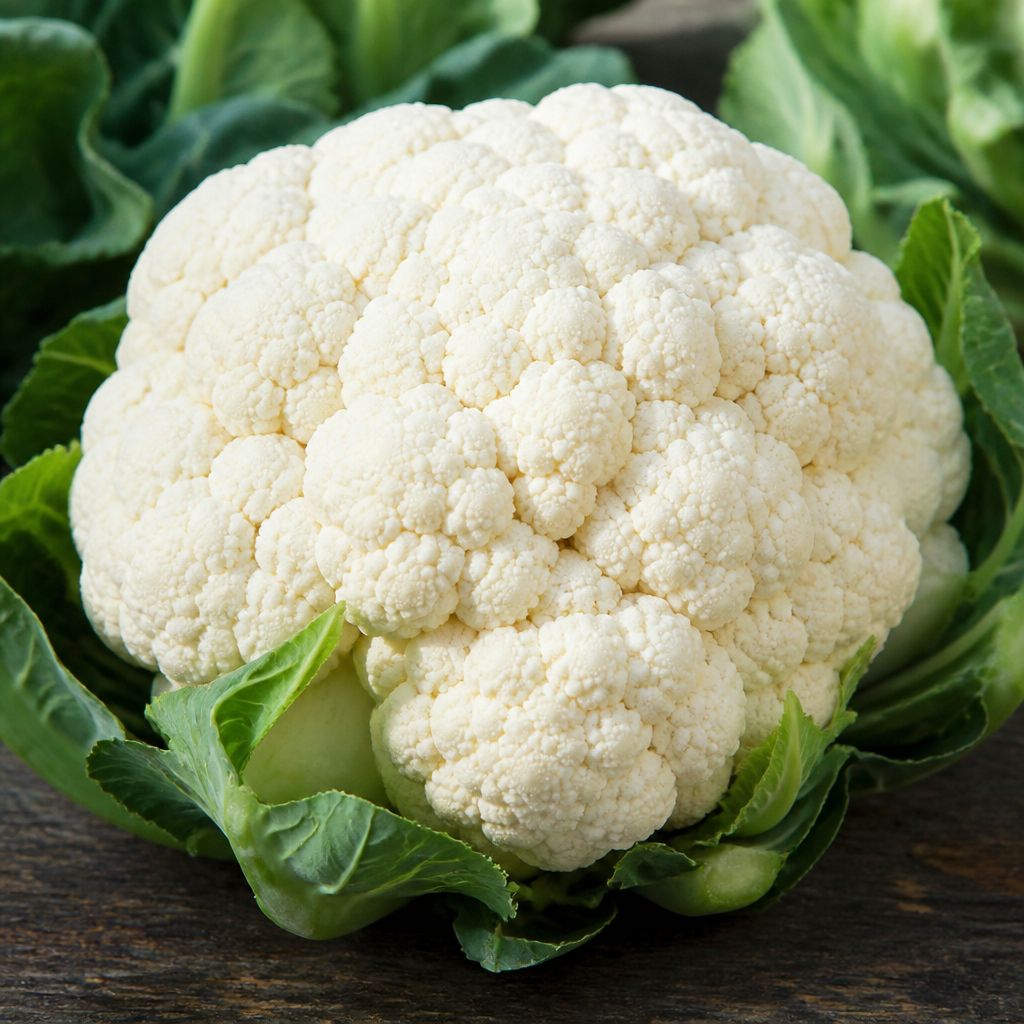
The cauliflower is an annual plant cultivated for its dense, edible flower head, commonly referred to as the "curd." Unlike other vegetables in the Brassica genus, cauliflower's curd is composed of undeveloped flower buds, which form a compact, white mass. The plant typically grows to a height of 45–60 centimeters (18–24 inches), with broad, green leaves that protect the curd from sunlight, preventing chlorophyll development and maintaining its characteristic pale color.
Cauliflower thrives in cool, temperate climates with consistent moisture, though modern agricultural techniques have enabled its cultivation in diverse environments. The plant requires well-drained, fertile soil with a pH between 6.0 and 7.0 for optimal growth. Harvesting occurs when the curd reaches a diameter of 15–25 centimeters (6–10 inches), depending on the variety, and is typically done by cutting the stem just below the head.
Nutritionally, cauliflower is low in calories (approximately 25 kcal per 100 grams) but rich in vitamins C, K, and B6, as well as dietary fiber, folate, and antioxidants like sulforaphane. Its high fiber content supports digestive health, while its antioxidant properties contribute to anti-inflammatory and potential cancer-preventive effects, as noted in studies published in the Journal of Agricultural and Food Chemistry (2015).
Cauliflower's versatility extends beyond its raw or cooked forms; it can be processed into rice-like grains, mashed as a low-carbohydrate alternative to potatoes, or even used as a gluten-free flour substitute. This adaptability has cemented its role in contemporary diets, particularly in low-carb and plant-based culinary trends.
Botanical Classification and Varieties
Cauliflower is classified under the species Brassica oleracea, which also includes kale, Brussels sprouts, and collard greens. Its specific variety, botrytis, distinguishes it from other Brassica cultivars. The plant exhibits significant phenotypic diversity, with varieties categorized by curd color, size, and growth habits. Common types include:
White cauliflower is the most widely cultivated, characterized by its pale curd, which results from the exclusion of sunlight during growth. Orange varieties, such as 'Cheddar' or 'Orange Bouquet,' contain higher levels of beta-carotene, a precursor to vitamin A, giving them their distinctive hue. Purple cauliflower, like the 'Graffiti' variety, owes its color to anthocyanins, water-soluble pigments with antioxidant properties. Green cauliflower, often called "broccoflower," is a hybrid of cauliflower and broccoli, featuring a sweeter, nuttier flavor.
Romanesco cauliflower, though technically a separate variety (Brassica oleracea var. botrytis 'Romanesco'), is notable for its fractal-like, lime-green florets and a flavor profile that blends cauliflower and broccoli. This variety's geometric structure has made it a subject of mathematical and botanical interest, as described in The Fractal Geometry of Nature (Mandelbrot, 1982).
Cultivation and Agricultural Practices
Cauliflower cultivation requires careful management of temperature, soil conditions, and pests. The plant is typically grown as a cool-season crop, with optimal temperatures ranging between 15–22°C (59–72°F). Extreme heat or cold can induce premature bolting (flowering) or stunted growth, respectively. Farmers often employ techniques such as "blanching" — tying the outer leaves over the curd — to protect it from sunlight and maintain its white color.
Soil preparation involves deep plowing and the incorporation of organic matter to ensure adequate drainage and nutrient availability. Cauliflower is susceptible to several pests, including cabbage worms (Pieris rapae), aphids, and flea beetles, as well as diseases like clubroot (Plasmodiophora brassicae) and downy mildew (Hyaloperonospora parasitica). Integrated pest management (IPM) strategies, such as crop rotation, biological controls, and resistant varieties, are commonly used to mitigate these risks.
Commercial production of cauliflower is significant in regions such as China, India, the United States, and Europe. According to the Food and Agriculture Organization (FAO), global cauliflower and broccoli production exceeded 25 million metric tons in 2020, with India and China accounting for over 70% of the total output. Advances in hybrid seed development have improved yield, disease resistance, and adaptability to varying climates.
Application Area
- Culinary Uses: Cauliflower is a staple in global cuisines, consumed raw, steamed, roasted, or fried. It serves as a low-carbohydrate substitute for grains and legumes, such as in cauliflower rice or pizza crusts. Its neutral flavor allows it to absorb spices and sauces, making it ideal for dishes like Indian aloo gobi or Mediterranean gratin.
- Nutritional and Health Applications: Due to its high fiber and antioxidant content, cauliflower is promoted in diets aimed at weight management, digestive health, and chronic disease prevention. Sulforaphane, a compound in cauliflower, has been studied for its potential anti-cancer properties, as documented in Cancer Prevention Research (2010).
- Agricultural and Economic Importance: Cauliflower is a valuable cash crop for farmers, particularly in regions with suitable climates. Its short growth cycle (60–100 days) and high market demand contribute to its economic viability. Additionally, cauliflower byproducts, such as leaves and stems, are used in animal feed or composting.
- Industrial Applications: Cauliflower is processed into frozen, canned, or dehydrated products for long-term storage. Its flour is used in gluten-free baking, while its extracts are incorporated into nutritional supplements and functional foods.
Well Known Examples
- White Cauliflower: The most common variety, used in classic dishes like cauliflower cheese (a British staple) or as a side vegetable in European and North American cuisines.
- Romanesco Cauliflower: Prized for its striking appearance and mild, nutty flavor, often featured in gourmet dishes or as a decorative element in culinary presentations.
- Orange and Purple Varieties: Increasingly popular in health-focused diets due to their enhanced nutritional profiles. Purple cauliflower, for instance, is used in salads for its vibrant color and antioxidant benefits.
- Cauliflower Rice: A low-carb alternative to traditional rice, widely adopted in ketogenic and paleo diets. It is made by pulverizing cauliflower florets into rice-sized granules.
Risks and Challenges
- Pest and Disease Susceptibility: Cauliflower is vulnerable to a range of pests and pathogens, including the diamondback moth (Plutella xylostella) and fungal diseases like alternaria leaf spot. These challenges can reduce yield and increase production costs.
- Climate Sensitivity: The plant's growth is highly dependent on stable temperatures. Heat stress can cause "buttoning" (premature curd formation), while frost can damage the curd, leading to economic losses for farmers.
- Post-Harvest Losses: Cauliflower has a relatively short shelf life compared to other vegetables. Improper storage or transportation can lead to spoilage, discoloration, or the development of off-flavors.
- Market Fluctuations: Oversupply or shifts in consumer demand can affect prices, impacting the profitability of cauliflower farming. For example, the rise of low-carb diets increased demand, while surpluses have occasionally led to price drops.
- Nutritional Misconceptions: While cauliflower is nutritious, it is sometimes overstated as a "superfood" without sufficient scientific backing for all claimed health benefits, leading to unrealistic expectations among consumers.
Similar Terms
- Broccoli (Brassica oleracea var. italica): A close relative of cauliflower, broccoli is cultivated for its green floral heads and stalks. Unlike cauliflower, broccoli's florets are developed flowers and are typically darker in color due to higher chlorophyll content.
- Brussels Sprouts (Brassica oleracea var. gemmifera): Another Brassica variety, Brussels sprouts are small, leafy buds that grow along a thick stalk. They share a similar flavor profile to cauliflower but are more bitter and dense.
- Kale (Brassica oleracea var. sabellica): A leafy green vegetable from the same species, kale is grown for its edible leaves rather than its flowers. It is richer in vitamins A and C compared to cauliflower but lacks the latter's compact curd structure.
- Cabbage (Brassica oleracea var. capitata): Cabbage forms a tight, leafy head and is another close relative. While it shares some nutritional benefits with cauliflower, its culinary uses and texture differ significantly.
Weblinks
- glorious-food-glossary.com: 'Cauliflower' in the glorious-food-glossary.com
- glorious-food-glossary.com: 'Blumenkohl' in the glorious-food-glossary.com
Articles with 'Cauliflower' in the title
- Cauliflower Rice: The term Cauliflower Rice refers to finely grated or pulsed cauliflower florets that mimic the texture and appearance of rice grains. Originating as a low-carbohydrate alternative, it has gained popularity in health-conscious . . .
Summary
Cauliflower is a nutrient-dense, versatile vegetable with a rich botanical history and wide-ranging applications in cuisine, agriculture, and health. Its unique curd structure, diverse varieties, and adaptability to different climates make it a globally significant crop. From traditional dishes to modern dietary trends, cauliflower's culinary flexibility is unmatched, while its nutritional profile supports various health benefits. However, its cultivation presents challenges, including pest management, climate sensitivity, and market volatility. Understanding these aspects underscores cauliflower's role as both a dietary staple and an agricultural commodity, reflecting its enduring importance in human nutrition and economy.
--
Related Articles to the term 'Cauliflower' | |
| 'Cauliflower Rice' | ■■■■■■■■■■ |
| The term Cauliflower Rice refers to finely grated or pulsed cauliflower florets that mimic the texture . . . Read More | |
| 'Collard' at glorious-food-glossary.com | ■■■■■■■■■■ |
| Collard in the food context refers to a type of leafy green vegetable, closely related to cabbage, kale, . . . Read More | |
| 'Cabbage' at glorious-food-glossary.com | ■■■■■■■■■ |
| Cabbage (Brassica oleracea or variants) is a leafy green biennial plant, grown as an annual vegetable . . . Read More | |
| 'Cauliflower' at glorious-food-glossary.com | ■■■■■■■■■ |
| Cauliflower is one of several vegetables in the species Brassica oleracea, in the family Brassicaceae. . . . Read More | |
| 'Arugula' | ■■■■■■■■■ |
| Arugula, also known as rocket salad, is a leafy green vegetable that has gained popularity in the fitness . . . Read More | |
| 'Repollo' at glorious-food-glossary.com | ■■■■■■■■ |
| Repollo is the Spanish word for cabbage, a leafy green, red, or white biennial plant that is widely used . . . Read More | |
| 'Buckwheat' | ■■■■■■■■ |
| The term Buckwheat refers to a highly nutritious, gluten-free pseudocereal that, despite its name, is . . . Read More | |
| 'Kale' | ■■■■■■■ |
| Kale in the fitness context is a nutrient-dense leafy green vegetable known for its numerous health benefits . . . Read More | |
| 'Edamame' | ■■■■■■■ |
| Edamame are young soybeans harvested before they fully mature, typically boiled or steamed and served . . . Read More | |
| 'Hemp Protein' | ■■■■■■■ |
| Hemp Protein: Hemp protein is a plant-based protein supplement derived from the seeds of the Cannabis . . . Read More | |